The Real Cost of Moving a Tonne
What separates the best operations from the rest
Ask an operator what a tonne of material costs to extract, and you will usually get a precise answer. Ask what it costs to move that same tonne one kilometre on a belt conveyor, and the room tends to go quiet.
This is remarkable. Transportation sits alongside extraction and processing as one of the major blocks of production cost in any mine, quarry or bulk terminal. And it is doubly remarkable once you see how widely that cost varies. Field benchmarks in belt conveying range from roughly three cents per ton-kilometre at world-class operations to ten times that figure at poorly run ones. Same physics, same task, same fundamental technology, yet a tenfold difference in cost.
The instinctive explanation is that some operations bought better equipment. The real explanation is less comfortable and far more useful: the gap is created almost entirely in categories that operators and their component partners can control. To understand it, you have to take the total cost of ownership apart.
Where the money actually goes
The TCO of a belt conveyor consists of the capital expenditure plus energy, maintenance labour, spare parts, and the category that is most often underestimated: production losses from unplanned downtime.
CAPEX gets nearly all the attention in procurement. Yet over a system lifetime of ten to thirty years it is routinely the smaller share. The purchase price is fixed on the day of the order. Every other category is decided afterwards, day by day, by how the system is designed in detail, operated and maintained.
Downtime deserves particular respect. In mining, fixed costs dominate and typically exceed ninety percent of production cost, which means an hour of unplanned standstill is lost revenue at nearly full cost. If the standstill blows a vessel loading schedule, demurrage for waiting ships comes on top. Whether a stoppage is a nuisance or a small catastrophe depends on whether production can be caught up over a weekend, and that in turn depends on how close to capacity the system already runs.
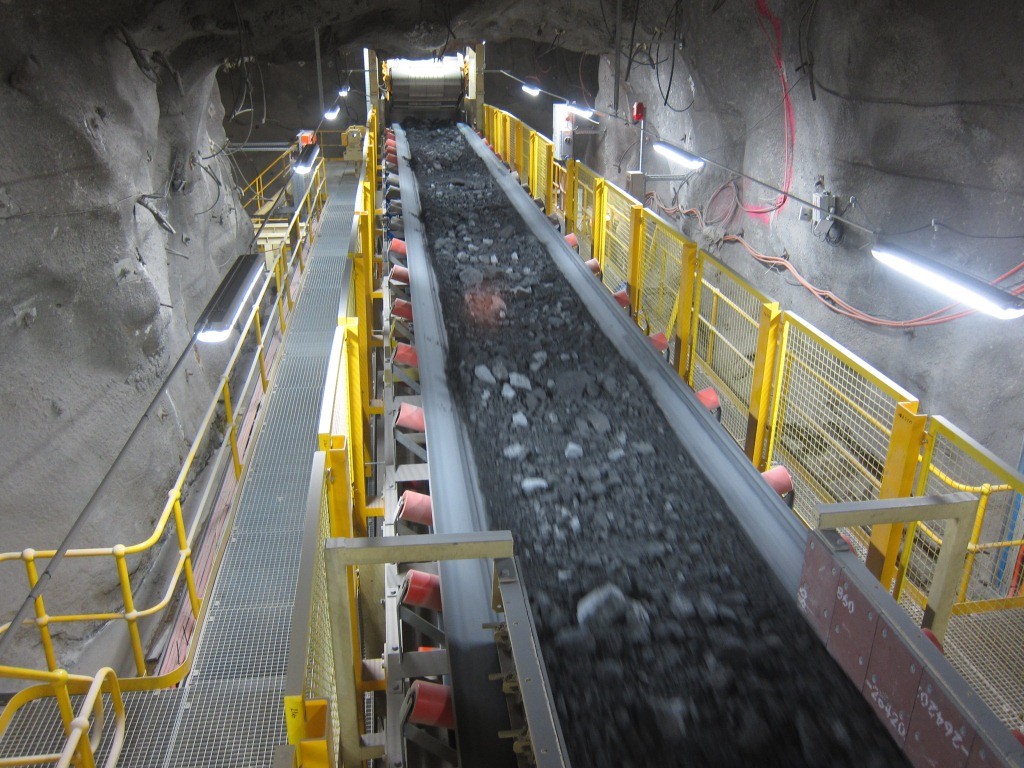
The failure statistics behind that downtime follow a consistent pattern. Belts fail through rips and breakthroughs caused by foreign objects in transfer chutes or trapped between belt and pulley, and through edge damage from misalignment. Idlers fail through their bearings. Pulleys fail through their lagging. Drives fail rarely thanks to modern condition monitoring, but expensively when they do. And a substantial share of stoppages involve no broken component at all: belt skewing, blocked chutes, overload and slippage are functional failures, rooted in alignment, cleaning discipline, chute design and drive control.
The energy bill nobody itemizes
If downtime is the most feared cost, energy is the most invisible one. It hides inside components that were bought by the piece.
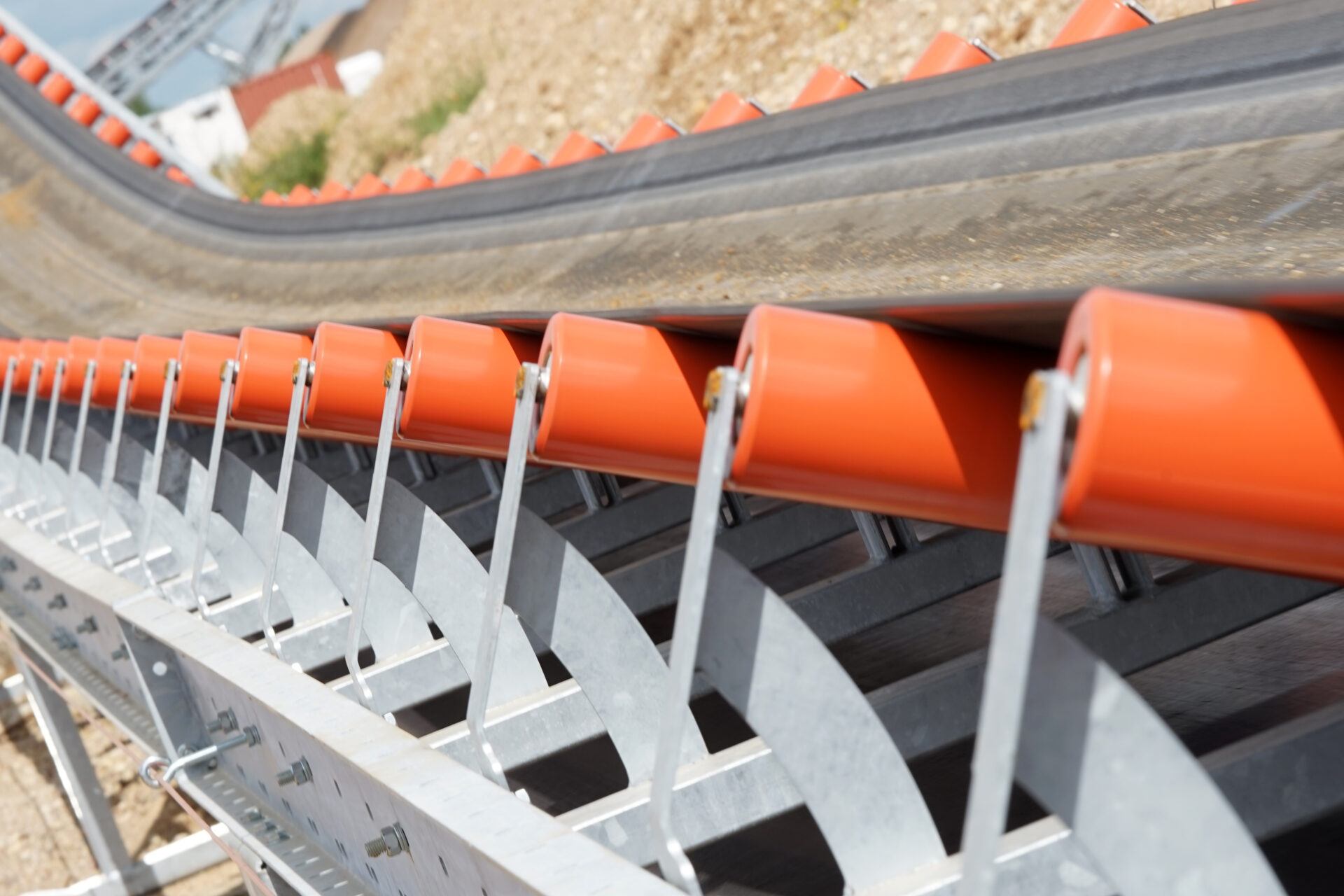
Consider the idler, the humblest part of the system. A quality roller with deep-groove ball bearings and well-designed sealing turns with a rolling resistance of two to six newtons. A poor one can reach twenty. The difference sounds academic until it is converted: at five metres per second and five thousand operating hours a year, each additional newton of rolling resistance consumes roughly twenty-five kilowatt-hours per roller per year. A single conveyor carries thousands of rollers. Across a system, the apparent savings from a cheap roller are consumed by the electricity meter within the first year, and the loss then repeats annually for as long as the roller turns.
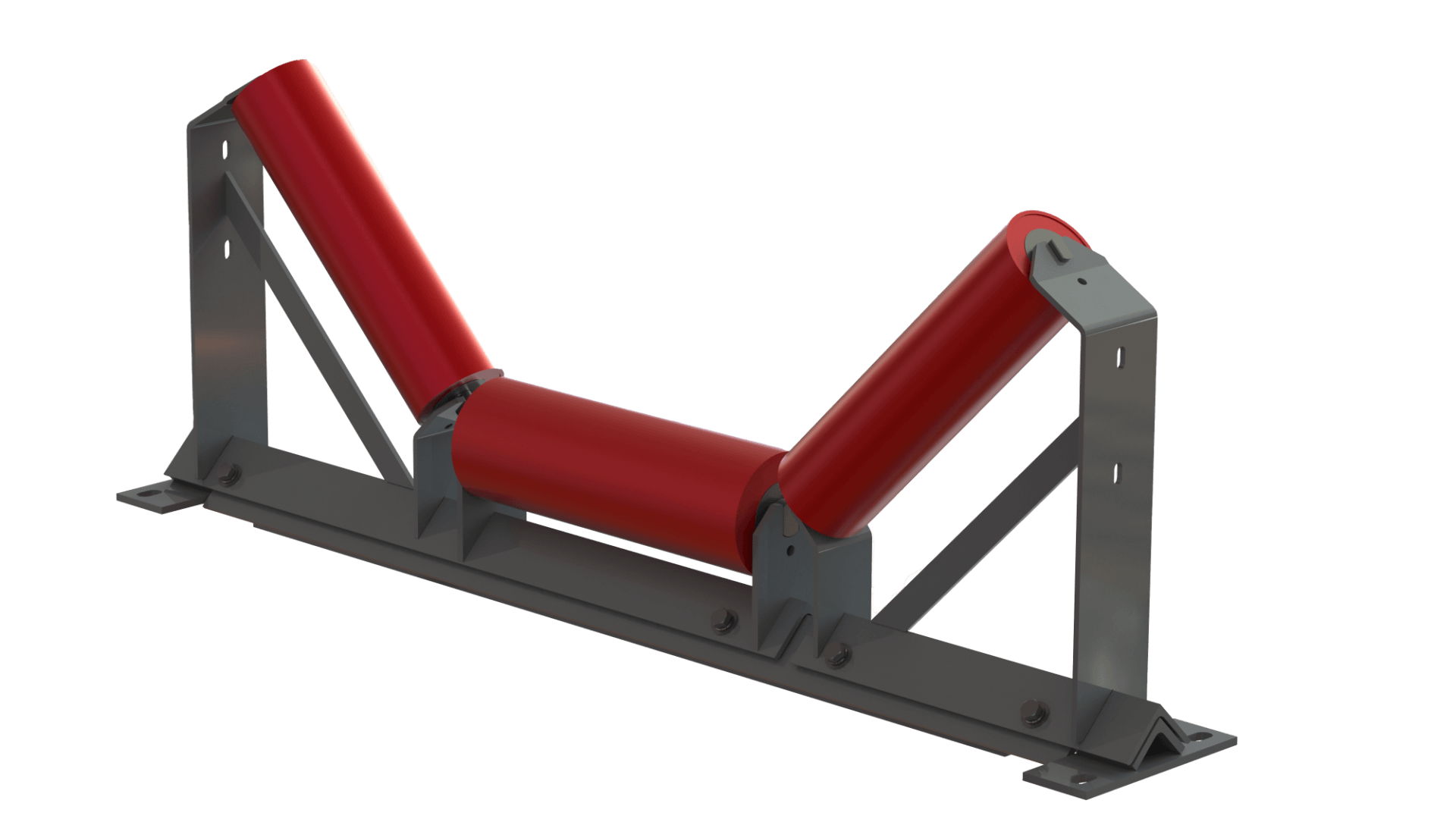
Diameter tells the same story. A 133-millimetre roller costs more than a 108-millimetre one. However it deflects the belt more gently and generates over twenty percent less rubber hysteresis work. These flexing losses occur where belt meets roller, at every station, every second of operation.
The belt itself is the extreme case. Over its service life, a conveyor belt consumes energy worth roughly ten times its own purchase price through rubber flexing alone. Field measurements have shown running-resistance differences of more than forty percent between belts of identical nominal strength. Identical datasheet, forty percent apart in energy consumption. An inefficient belt can burn more money in additional electricity than its entire purchase price, meaning that even a free bad belt would be more expensive than a good one. Yet tenders still compare belts by price per metre.
Why components die before their time
If quality were the whole story, buying premium components would end the discussion. It does not and understanding why is what separates genuine expertise from catalogue knowledge.
The service life of every conveyor component is dominated by the real operating conditions inside the system, and these routinely differ from every assumption made at the design stage.
An idler bearing is selected for a calculated load spectrum, but reality often delivers a harder one: coarser lumps, height deviations between stations, lateral vibration from an unlucky combination of spacing, diameter and belt tension, or a belt-speed increase after a capacity upgrade that nobody communicated to the idlers. Contamination is the second killer. The labyrinth-seal grease slowly saturates with dust, and once particles migrate into the bearing grease, wear accelerates dramatically. A clogged venting system makes it worse by forcing the daily temperature cycle to breathe straight through the seals. Even the fit between bearing ring and seat matters. Chosen poorly, it permits micro-movements whose iron-oxide debris grinds the bearing to death from the inside.
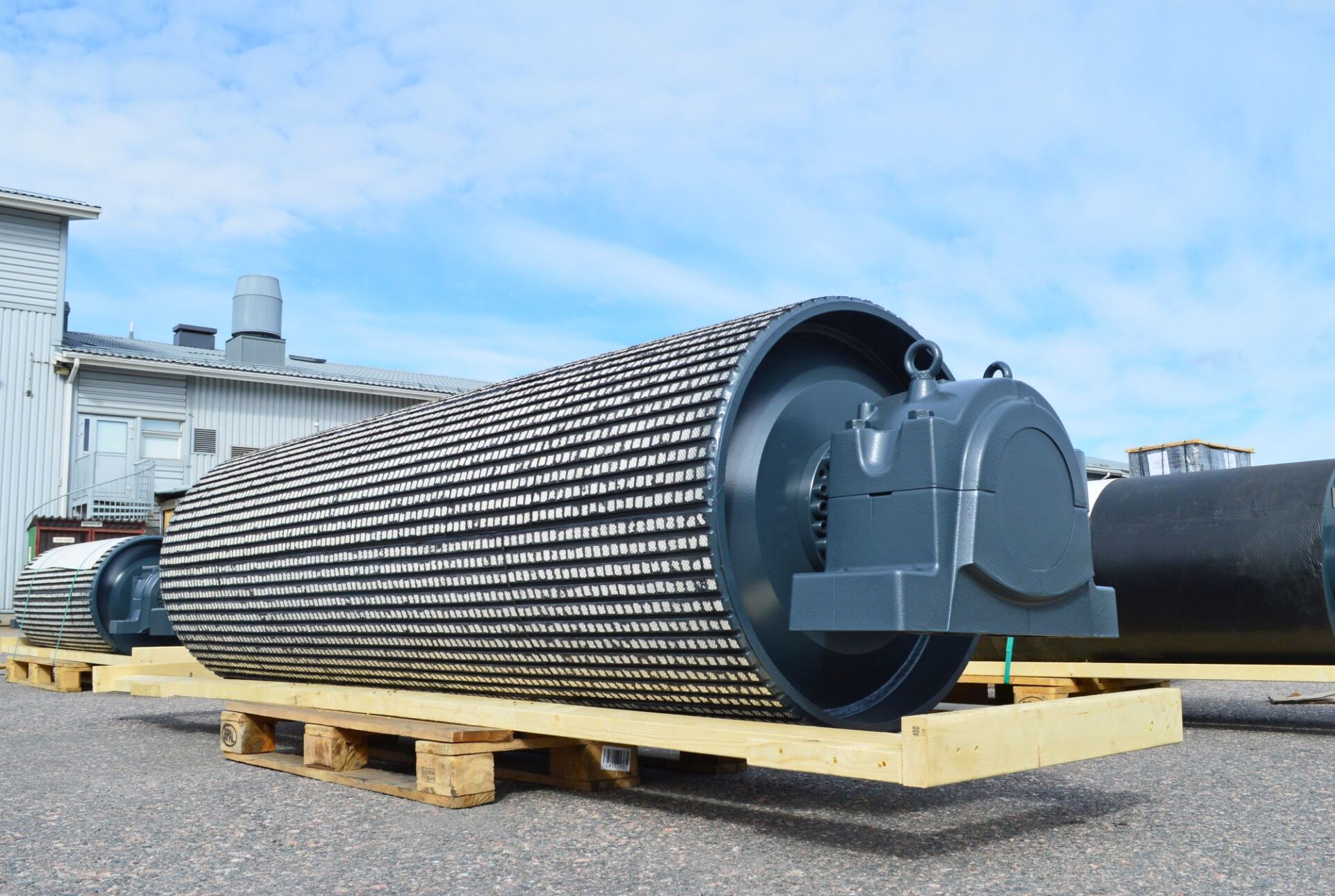
Pulleys follow the same logic. The dominant failure is lagging damage, and selecting the right lagging requires information the manufacturer rarely receives: whether the pulley contacts the carrying or the dirty side of the belt, the tension distribution (critical with steel-cord belts), the length of the troughing transitions, the speed. Head and tail pulleys under uneven belt forces live the hardest lives, together with any pulley running against a contaminated belt. Order a pulley like a catalogue part and it will fail prematurely in a position nobody described.
And then there is the cascade that no datasheet can survive. Neglected belt scrapers let carryback build up on return idlers. The buildup steers the belt offline. Misalignment cuts the belt edges. Damaged edges spill material. Spillage collects at the tail station until material is trapped between belt and pulley, and now the belt, the lagging and the return idlers fail together. Half a year after the first skipped scraper service, the line is being rebuilt, and the components are being blamed. The connection between neglect and availability is time-delayed, which is precisely why it goes unrecognized.
The transparency problem, and where the industry is heading
All of this points to one structural weakness: neither operators nor suppliers can normally see the conditions that decide component life. The supplier ships his product into a black box and learns years later that it failed early, with no record of what it actually endured. Without the load history, the question of whether it was a good component has no honest answer. The information gap punishes quality manufacturers, protects poor ones, and reduces every product to its price tag. This is the CAPEX-OPEX dilemma that keeps the whole industry buying on purchase price against its own economic interest.
That is why the most important development in bulk material handling right now is not a new component at all. It is transparency: monitoring systems and digital models that record the real loads on belts, rollers, pulleys and drives, detect anomalies early, and make component condition and remaining life visible. Once real performance can be measured, business models change with it, away from selling pieces and toward being accountable for cost per tonne conveyed, with availability and energy consumption as measurable, contractable quantities.
We welcome that direction without reservation. Components engineered for lifetime, energy efficiency and reliability have nothing to fear from measurement. On the contrary, measurement is what finally turns their value from argument into arithmetic. It is the standard we have built to since 1969, and the standard we believe the market is now, at last, learning to pay for.
The tenfold cost gap between the best and the rest is not fate. It is the sum of a thousand small decisions: which roller, which seal, which diameter, which scraper serviced on time, which question asked before the order. The operations at three cents per ton-kilometre are not lucky. They simply stopped treating transport as a black box.
Would you like to discuss more about this topic?
Don’t hesitate to CONTACT US .
Our Products