The Hidden Factors Behind Conveyor Pulley Reliability
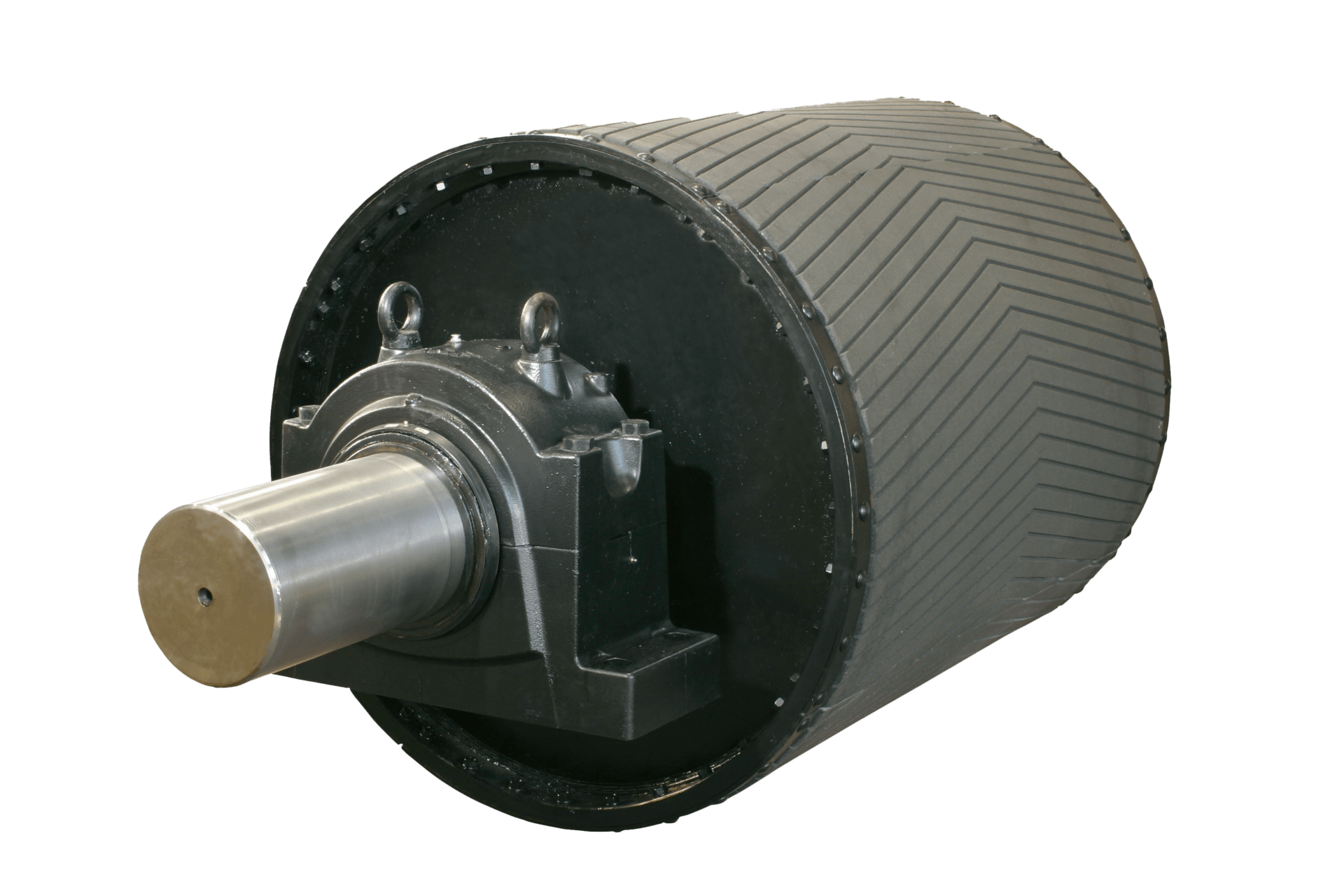
A conveyor pulley may appear to be a simple component, but its impact on system reliability, maintenance costs, and operational performance is anything but simple. From shaft deflection and environmental influences on lifecycle cost considerations, the right pulley design can make the difference between years of dependable operation and costly downtime.
In this interview our pulley specialist Mustafa Aydin shares his insights into the most overlooked challenges in pulley engineering and explains how application-specific design helps customers achieve lasting performance.
What is the biggest, overlooked challenge currently facing customers or material handling systems when it comes to pulleys?
The biggest — and often most underestimated — challenge is that a pulley is never a standard off-the-shelf product. Every conveyor pulley is a custom-engineered component that must be precisely matched to its specific application. Looking only at diameter and face width is not enough. In fact, a silent killer of many systems is shaft deflection. Even a structurally sound pulley can fail if the shaft flexes too much under load, leading to premature bearing failure or locking assembly slippage.
This includes factors such as belt tension, wrap angle, load, installation situation, running behavior, and of course the external influences at the site. Environmental conditions in particular are often overlooked. Corrosive media, moisture, dust, high temperatures, or aggressive operating conditions all have a direct impact on pulley performance and service life. If a pulley is not properly designed or protected for these conditions, damage often begins in sensitive areas such as the welded joints.
The real challenge, therefore, is not choosing just any pulley — it is choosing the right pulley for the exact application. Only then can long-term reliability, service life, and cost efficiency be ensured.
What is GURTEC’s take on this?
At GURTEC, we do not offer off-the-shelf products — we provide application-specific solutions. Every pulley is engineered in the context of the complete conveyor system and designed to match the real operating conditions. That means we look not only at the technical data of the plant, but also at the environment, the conveyed material, and the overall performance requirements.
While many standard applications follow proven geometries, GURTEC maintains the in-house capability for Finite Element Analysis (FEA) and advanced stress modeling for critical or high-tension applications. We don’t guess – we validate. Based on this, we develop pulley solutions that are technically sound, durable, and economically efficient. This starts with the right dimensioning and extends to material selection, corrosion protection, bearing arrangement, lagging, shaft-hub connection, and production-oriented design. Our goal is not simply to deliver a pulley that works, but one that performs reliably over the long term.
What makes the difference is practical experience. We understand which design mistakes can later lead to downtime, increased wear, or reduced maintenance intervals. That is exactly where GURTEC adds value: with engineering expertise, precise design, and solutions tailored to real-world applications.
What are the key things to consider when choosing pulleys?
When selecting a new pulley, there are six key points that should always be considered:
- The actual operating data of the system
Belt tension, circumferential force, wrap angle, torque, belt speed, and installation conditions define the mechanical load on the pulley. Without complete and reliable operating data, a pulley cannot be properly designed. - The environmental conditions
Corrosion, moisture, dust, chemical exposure, or extreme temperatures all have a major influence on service life and the required protection concept. A pulley must not only withstand the load — it must also withstand its environment. - The correct mechanical design
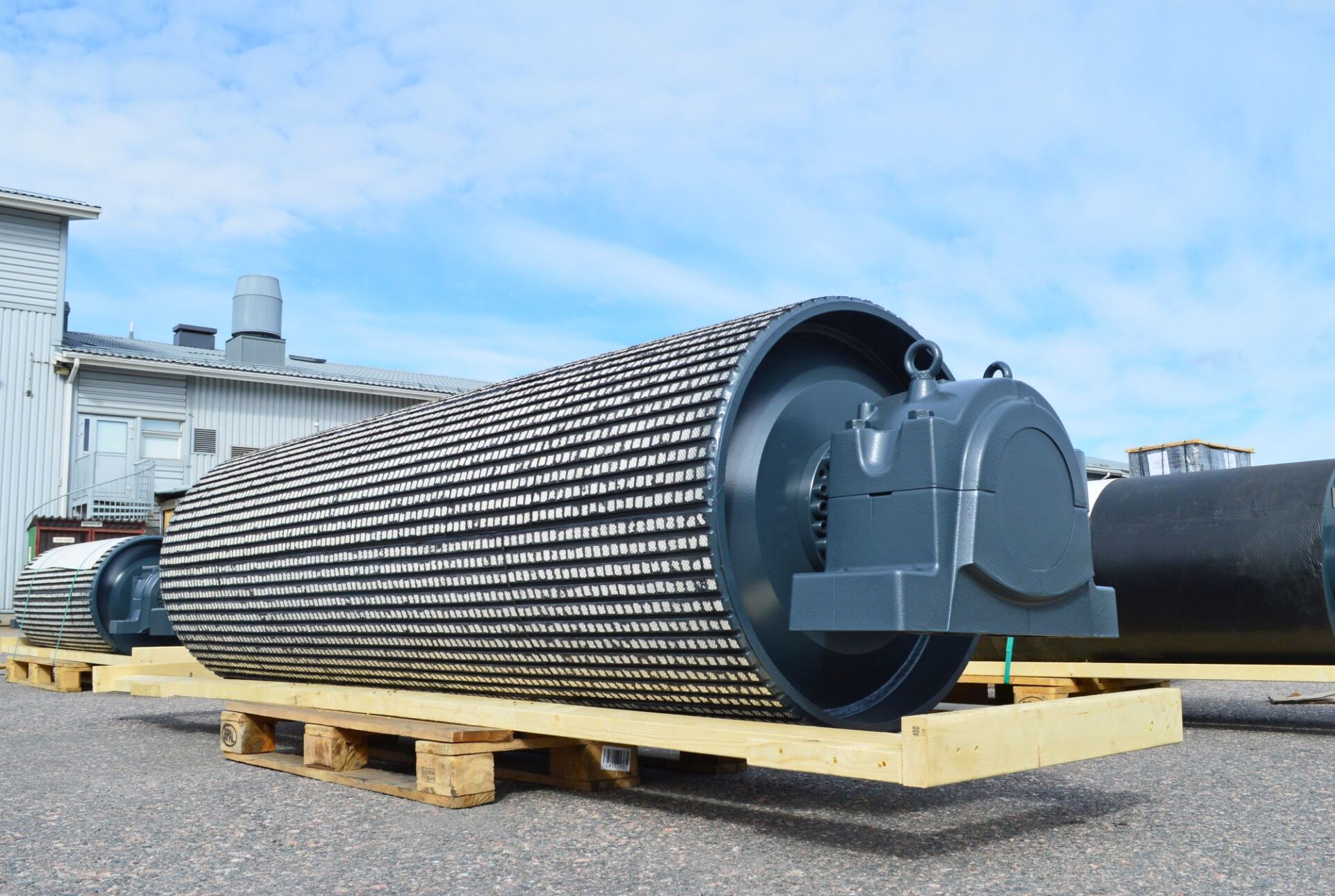
Shell, end discs, shaft, bearings, and connection elements must all be considered as one complete system. A well-designed pulley is not simply overbuilt — it is correctly engineered at every critical point. This is what determines whether it will perform reliably over time. - The right coating or lagging
Lagging has a major impact on grip, wear behavior, and protection of the pulley surface. Depending on the application, the right lagging solution can be critical to ensure reliable operation and preventing premature damage. - Maintainability and lifetime cost efficiency
The purchase price alone should never be the deciding factor. It is just as important to consider how easily a pulley can be maintained, refurbished, or modernized. A good solution always considers availability, service effort, and long-term operating costs.
In short, choosing a new pulley should never be based only on a few dimensions or the lowest price. What matters most is how well the pulley fits the real application. - Deflection and Stiffness (The Engineering Edge)
We engineer specific deflection limits at the hub. By ensuring the shaft remains stiff under the calculated belt pull, we protect the internal bearings from misalignment and premature failure.
When is it enough to refurbish or modernize a pulley, and when does a customer need a new one?
Refurbishment plays a very important role when it comes to pulleys. Conveyor pulleys are generally designed for technical fatigue strength. This means they do not have fixed replacement intervals like typical wear parts and can remain in operation for many years, provided that the core structure is still in good condition.
In most cases, visible wear appears primarily on the lagging, as it is in permanent contact with the conveyor belt. That is why refurbishment is often a sensible alternative to complete replacement. However, whenever the lagging is renewed, it also makes sense to inspect the bearing units, plummer block bearings, shaft, and the pulley structure itself for any signs of wear or damage. Especially for large pulleys, refurbishment is often highly attractive from an economic perspective.
However, we always weigh this against the Total Cost of Ownership (TCO). If a pulley requires specialized crane rentals and significant downtime for a swap, we help the customer calculate if a new, high-spec pulley is more economical than risking a refurbished unit in a high-stress spot.
A new pulley is required whenever the issue goes beyond the surface and affects the structural integrity of the pulley itself. This includes problems such as structural damage, cracking, heavy corrosion, weld defects, deformation, or operating behavior that point to deeper mechanical issues. If damage patterns continue to appear in the lagging, if the pulley runs irregularly, or if operation begins to stall, it is definitely time to take action.
Ultimately, the rule is simple: as long as the load-bearing structure is sound, refurbishment can be a highly effective and sustainable solution. But once technical safety or operational reliability is compromised, replacement becomes the only responsible option.
Don’t hesitate to CONTACT US for more info!
Our Products